


Ecosystem-based adaptation a good way forward to addressing climate change issues |13 June 2016
The negative effects of climate change are being experienced by local communities within a wide range of economic sectors in developing countries across Africa and Asia-Pacific. There is an urgent need for immediate and adequate actions to adapt to climate change before its impacts become unmanageable.
Ecosystem-based Adaptation through South- South Cooperation (EbA South) is a full-sized GEF project funded through the Special Climate Change Fund (GEF-SCCF). The project aims to assist local communities in developing countries in Africa and Asia-Pacific to adapt to the impacts of climate change, by improving their capacity to plan, finance, implement, research and legislate in support of EbA.
EbA refers to the use of living organisms or biodiversity in a community (ecosystem) and their services as part of an overall adaptation strategy to help people and communities adapt to the adverse effects of climate change at all levels.
This regional project is entitled ‘Enhancing capacity, knowledge and technology support to build climate resilience of vulnerable developing countries; Ecosystem-based Adaptation (EBA - SOUTH)’ is considered a “first mover” in catalysing global and regional collaboration on Ecosystem-based Adaptation under the GEF guidelines, in particular within the framework of South-South cooperation. EbA-South seeks to build climate resilience by increasing institutional capacity, mobilising knowledge and transferring appropriate adaptation technologies.
In addition to interregional activities, the project is leading concrete, on-the-ground adaptation interventions in three pilot countries; Mauritania, Nepal and Seychelles, representing three different vulnerable ecosystems (dryland, mountain and coastal respectively).
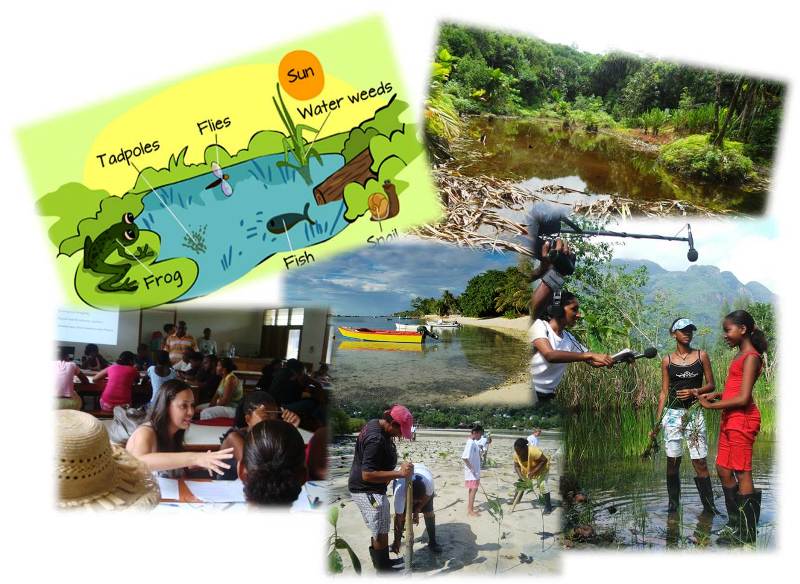
The Seychelles is moving ahead with its implementation plan of this regional initiative, as we are concerned about producing evidence that EbA works for coastal adaptation in the country. Trainings have been conducted about the EbA concepts, principles and practices for trainers, scientific community, practitioners including government staff, NGOs and community members in order to ensure better planning, appropriate implementation, management and research on the effects of concrete on-the-ground EbA interventions such as effective restoration techniques such as nursery management, mangrove propagation and planting and maintenance of restored areas. Other local community groups including scholars are also involved in the on-going education campaign for increased awareness of climate change impacts on our small island and how our individual actions and collective participation can assist in finding natural solutions to climate change impacts. Technical interventions on the 10 selected sites on Mahé, Praslin and Curieuse islands are also underway.
Besides these intervention the Seychelles project team is attempting to further build capacity, understanding and to raise awareness of the local target groups on the impact of climate change and associated human pressures on natural ecosystems including mangroves and how ecosystem-based adaptation measures can work effectively to reduce the pressures and address the impacts. In doing so, we would later be able to assess the level of awareness of the beneficiaries as well as encourage their sharing of experience and knowledge of climate change and EbA in general. People will eventually understand that restoring and maintaining good ecosystem functions and services using ecosystem-based approaches protects communities from climate change impacts.
Contributed